From a conversation with Jiman Hana, owner of J Beauty Spa ·
Who should not get microneedling (yet)?
Jiman’s rule is simple:
“The person who has active acne usually has to wait. Definitely, I will not touch their skin with microneedling if they have active acne.”
Active acne means breakouts that are inflamed right now. Needling through them can spread the irritation, so the skin needs to calm down first. If that’s where your skin is today, Jiman starts somewhere gentler, such as an acne facial, and plans microneedling for later. Her approach to breakouts is in Best facial for dry skin vs acne-prone skin.
Medication matters too. Jiman asks every new client what they take, and some medications mean waiting. Accutane is the one she names first (what she asks at a first visit). After a course, her rule for microneedling is:
“For microneedling, I recommend an individual assessment and medical clearance when appropriate.”
So there is no set number of weeks. She looks at your skin first and, where it’s needed, asks for your doctor’s OK before she books you in.
Other reasons to wait
These are the reasons clinics most often give for holding off. If any of them applies to you, tell Jiman before you book. She’ll tell you whether to wait, and for how long.
- A cold sore, an infection or broken skin where she would be treating. Needling can spread it.
- A flare-up of eczema, psoriasis or rosacea, or a bad sunburn. Let the skin settle first.
- Pregnancy or breastfeeding. Most providers wait.
- Keloid or raised scars in your history. The tiny injuries can set off new ones.
- A bleeding disorder or blood thinners, which can mean more bleeding and bruising.
- A condition or treatment that slows healing, such as an autoimmune condition, uncontrolled diabetes or cancer treatment.
- Recent Accutane (isotretinoin). Skin heals differently for months after a course. Jiman assesses each client individually, as above.
Who is microneedling for?
“The people I highly recommend it for are people age thirty and up, with fine lines and wrinkles.”
Why thirty? In Jiman’s words, “collagen production naturally begins to decline gradually in our mid-20s.” By the thirties that shows as the first fine lines, and microneedling is how she helps the skin build collagen back.
So if you’re in your thirties and the first fine lines are showing, microneedling is the treatment she has in mind. For the home routine that goes with it, see First fine lines in your 30s.
What does microneedling do?
In Jiman’s words:
“Microneedling is collagen stimulation. It also helps with evening the skin colour, but the main thing is collagen stimulation: anti-aging, fine lines, wrinkles.”
A pen with very fine needles passes over the skin and leaves tiny channels. The skin repairs those channels, and that repair is what prompts new collagen. The channels also give the serum used in the session a way into the skin, which is why the product matters as much as the needling.
What goes on your skin during the session?
“It depends on the product that I’m using during the microneedling session. I use pure hyaluronic acid […] or vitamin C, or collagen.”
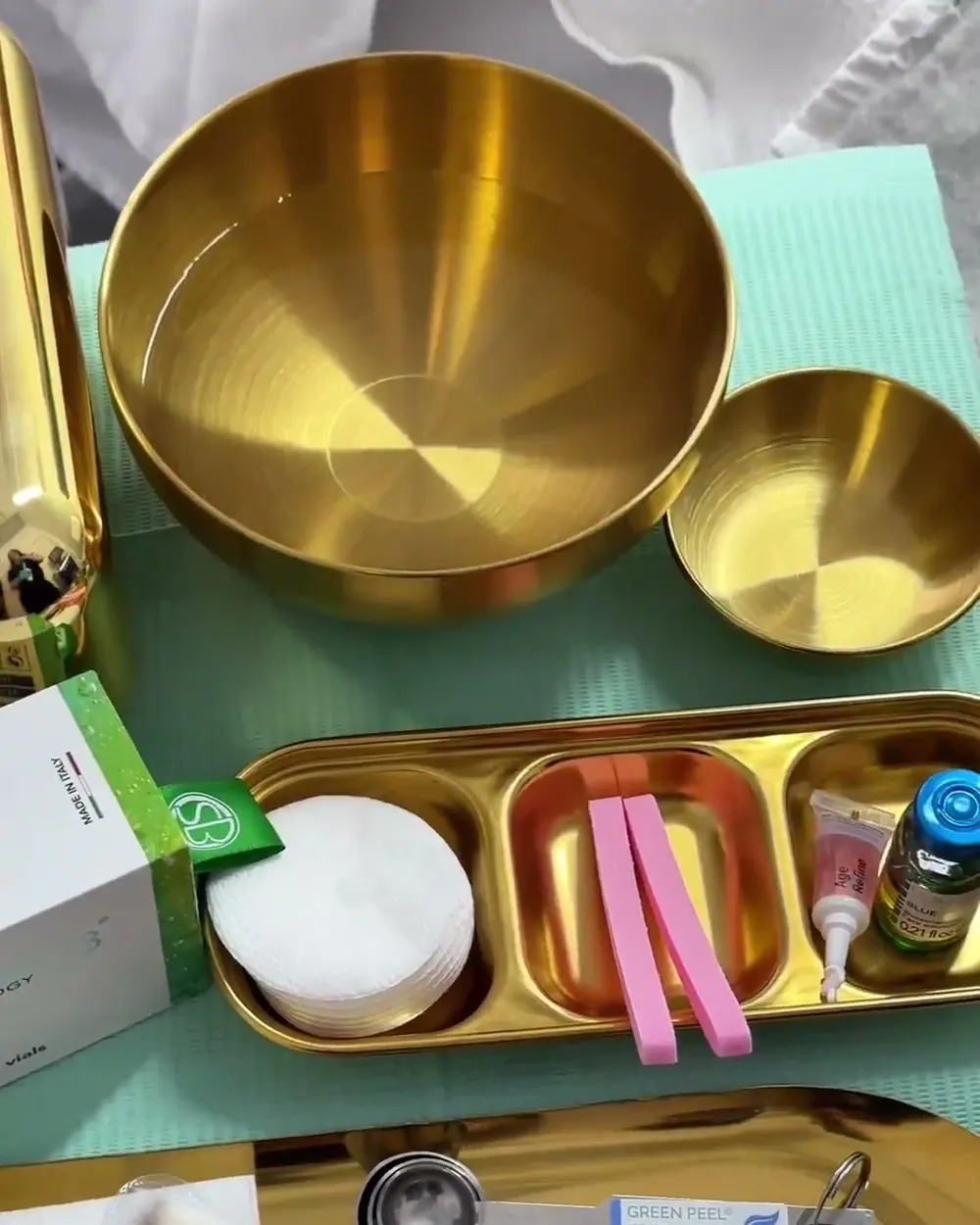
Jiman chooses what goes on for the skin in front of her. Her standard Microneedling treatment uses hyaluronic acid and a serum picked for your skin, and finishes with a mask and LED light.
Does microneedling hurt?
Jiman doesn’t pretend it doesn’t:
“During the microneedling it’s going to be painful. There is a small needle that creates microchannels. That’s why we use numbing cream before the treatment, to avoid or to reduce the pain.”
The serums that go on afterwards don’t hurt. In her words, “it’s not going to be painful.” Expect a numbing step at the start of the appointment, so allow the full time when you book. Afterwards, the home care she gives you is part of the treatment.